Val di Suga
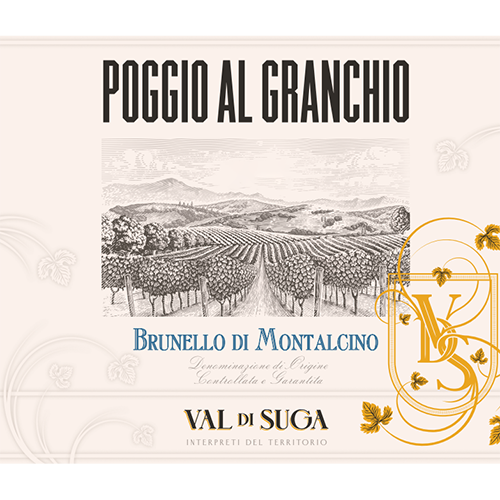
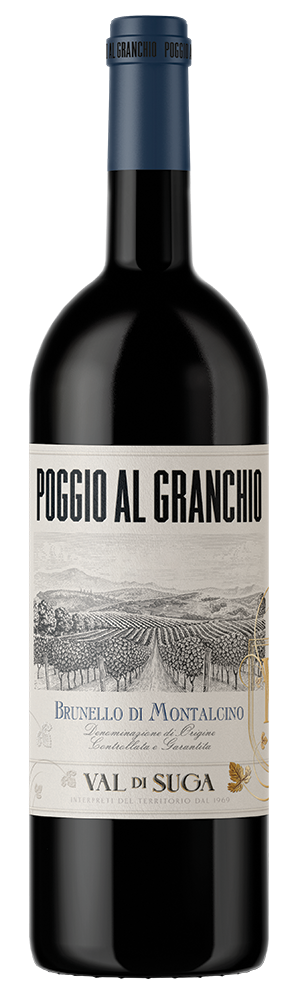
Brunello di Montalcino DOCG Poggio al Granchio
Poggio al Granchio, located on the southeastern side of Montalcino, expresses the distinctive characteristics of the galestro shale soils. These soils contribute to a wine with a lower pH, higher acidity, and thick, firm tannins. Known for its muscular expression, Poggio al Granchio represents the more powerful and age-worthy side of Brunello di Montalcino. The vineyard's unique terroir allows for the production of a wine with exceptional structure and the potential for long-term aging, reflecting a different, bold and enduring quality of the land.
Located to the southeast, the imposing Mount Amiata influences the mesoclimate of this prestigious sector, one of the most renowned in the Montalcino appellation. The vineyards are planted on 'galestro schist' soils, which impart a unique character to the Sangiovese grown here—tight, juicy, and wild, with rich iron notes and subtle graphite hints. Farmed using regenerative viticulture practices, the vineyard features 24-year-old vines and is situated in south-east facing plots, benefiting from optimal sunlight exposure. This combination of terroir, age, and sustainable farming contributes to wines of exceptional complexity and distinctive style.
- Region
- Tuscany
- Appellation
- Brunello di Montalcino DOCG
- Varietal Composition
- Sangiovese
- Aging
- 24 months in 60-hectoliter French oak barrels, followed by 6 months in concrete before being bottled, where it remains for at least 6 months.
- Alcohol
- 14.58%
On the nose it shows a combination of red and black fruits complexed by lifted leafy note and gamy character. The palate is bloody and full of energy.
Wine Spectator
97 Points
2021
"This is rich, round and saturated with flavors of cherry, blackberry, rose hip and wild herbs. Though dense and still a bit monolithic, this red remains beautifully balanced, expressive and long, with an underlying mineral vein. Shows fine complexity and youthful vigor. Best from 2030 through 2050."
— Bruce Sanderson, 2026
Jeb Dunnuck
96 Points
2021
"From the southeast near Mount Amiata and some of the estate’s highest vineyards at 380 to 420 meters, the 2021 Brunello Di Montalcino Poggio Al Granchio pours a youthful ruby red hue and opens with grenadine, brushy Mediterranean herbs, wildflowers, and leather. The palate is medium-bodied yet broader than the Vigna del Lago, with a linear, refined feel, refreshing acidity, and ripe tannins that stay polished through the long finish. It shows a subtle rustic edge woven into the fabric, but the second tasting had noticeably more clarity and precision. It’s an exceptional wine that should improve over the next decade. Drink 2026-2045."
— Audrey Frick, 2026